


The Polish Chapter of the Society of Catholic Scientists would like to invite you to a unique event – an international scientific conference “Faith and Science: two paths towards truth”, which will be held on July 1-2, 2023 at the Dominican Friars’ Monastery in Krakow.
During the conference, Catholic scientists will share their knowledge, and personal views for mutual enrichment, both among themselves and theologians and for the wider community. The conference is open to the public upon prior registration at no cost thanks to a generous donation from the Templeton Foundation.
Speakers will include papal biographer Dr George Weigel, physicists: Prof. Stephen Barr, Prof. Krzysztof Meissner and Prof. Leszek Roszkowski, theologians: Dr. Mariusz Tabaczek OP and Fr. Prof. Piotr Roszak, biologists and chemists: Prof. Aaron Schurger, Prof. Conway Morris and Prof. Lawrence M. Principe, physicist and philosopher Dr. Mariusz Stopa OP and others.
Before the conference in a contest for high-school students the best works describing their views on interconnection between science and faith will be selected.
Lectures will be presented in English.
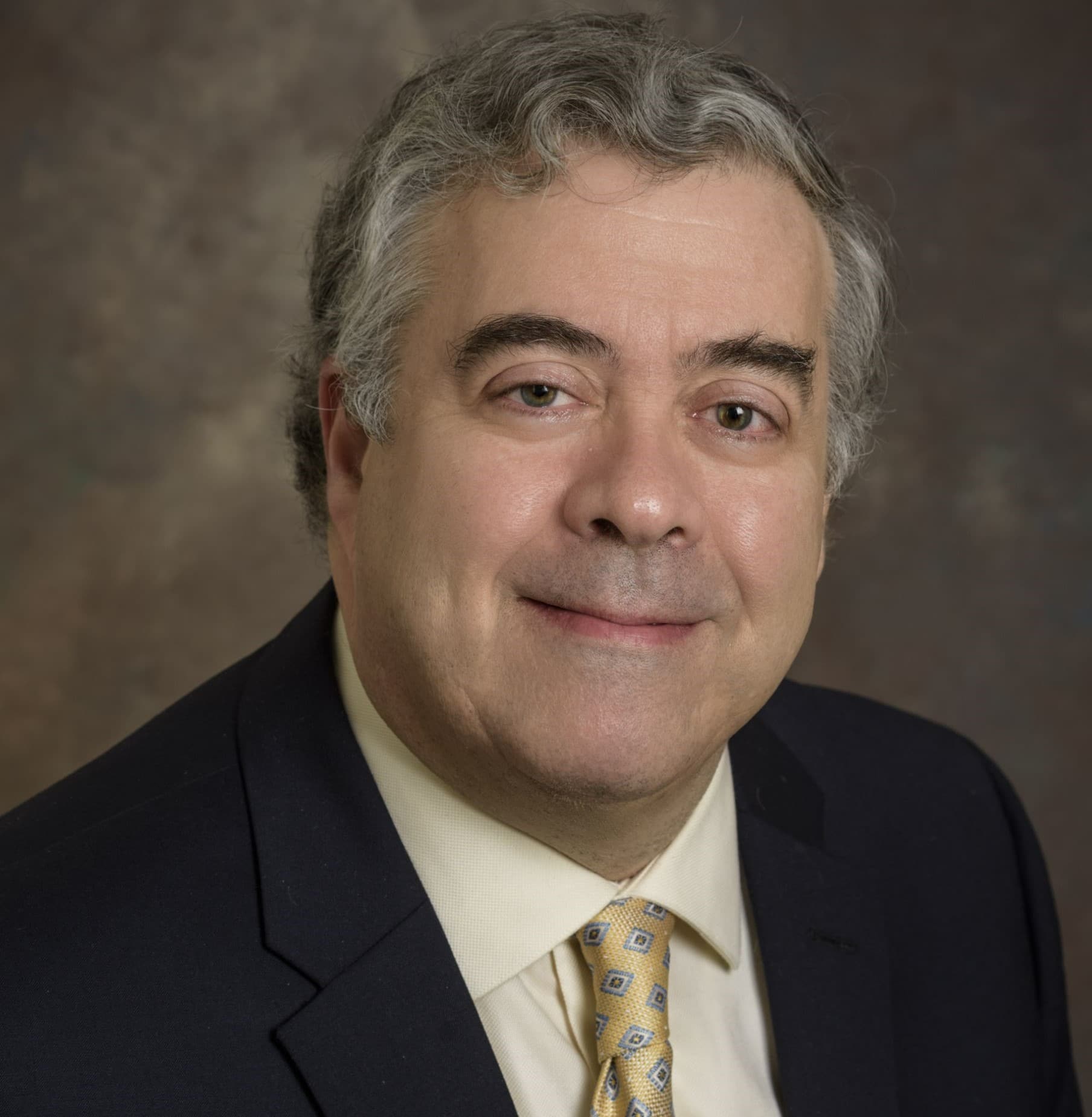 Stephen M. Barr (President, SCS) is Professor Emeritus in the Department of Physics and Astronomy of the University of Delaware and former Director of its Bartol Research Institute. (Ph.D. Physics 1978, Princeton University) Prof. Barr does research in theoretical particle physics, especially grand unified theories, theories of CP violation, neutrino oscillations, and particle cosmology. He is a Fellow of the American Physical Society (2011). He is the author of Modern Physics and Ancient Faith (Univ. of Notre Dame Press, 2003).
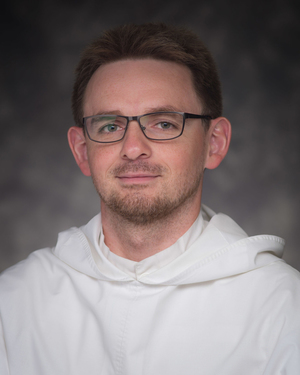 Mariusz Tabaczek, O.P – Polish Dominican, received his Ph.D. in systematic and philosophical theology (Ph.D.) from the Graduate Theological Union, Berkeley (CA), and before that his ecclesiastical bachelor’s degree from the Adam Mickiewicz University in Poznan, Poland. Adam Mickiewicz University in Poznań, member of the Thomistic Institute, lecturer at the Pontifical Faculty of Theology in Warsaw, the College of Philosophy and Theology of the Polish Dominican Province in Cracow, the Dominican School of Philosophy and Theology in Cracow, the Angelicum Thomistic Institute, director of the Dominicanum Studies in Warsaw, vice-dean of the Angelicum Faculty of Theology in Rome since 2023.
 Aaron Schurger is principal investigator (chargé de recherche 1) with the French National Institute for Health and Medical Research (INSERM), based at the NeuroSpin Research Center near Paris, and also holds a faculty appointment in the Department of Psychology and Institute for Interdisciplinary Brain and Behavioral Sciences at Chapman University. His research focuses on the neural signatures of subjective experience and the neural antecedents of self-initiated movement. He received PhD in psychology and neuroscience from Princeton University. In 2013, Schurger was awarded the William James Prize from the Association for the Scientific Study of Consciousness (ASSC) and in 2015 was awarded the BMI-Kaloy prize from the Kaloy Foundation for his 2012 work on the role of spontaneous fluctuations in brain activity in self-initiated movement.
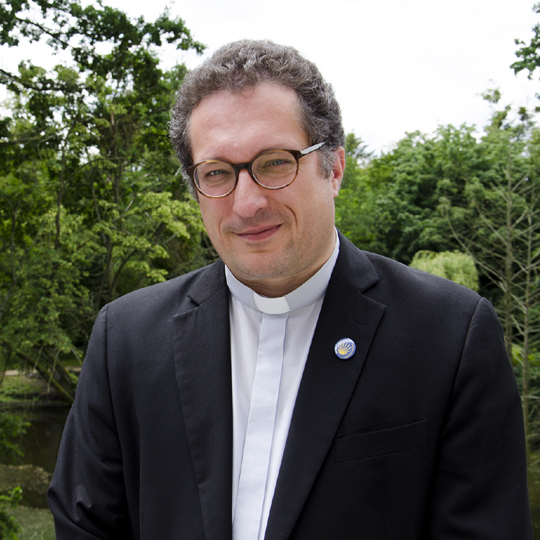 Prof. Piotr Roszak – priest of the Diocese of Torun; received his doctorate in systematic theology from the University of Navarra in 2009, based on his dissertation “Mysterium en santo Tomás de Aquino” written under the supervision of Rev. Prof. Cesar Izquierdo. From 2008 to 2010, he was an assistant to the Department of Dogmatic and Fundamental Theology at the University of Navarre, coordinating scientific exchanges between Poland and Navarre, including, in particular, between UMK and UN. Since 2010, he has been employed at the Faculty of Theology at UMK as Assistant Professor of the Department of Fundamental Theology and Religiology, while also being an Associate Professor at the University of Navarre. Since 2016, he has been Associate Dean for Academic Affairs of the Faculty of Theology at UMK, and Head of the St. James Trail (Camino de Santiago) Laboratory at UMK. Together with professors from Navarre, he has carried out research grants funded by the National Science Center (on the biblical exegesis of Thomas Aquinas, Spanish-Mozarabic liturgy and the phenomenon of pilgrimages to Compostela). Winner of the Europa Prize awarded by the Center for European Studies at the University of Navarra in Pamplona. Translator of articles and books from Spanish.
 Leszek Roszkowski
 George Weigel – american theologian and publicist, born in 1951 in Baltimore. He graduated in philosophy from the University of St. Michael’s College in Toronto. He has also been awarded 18 honorary doctorates and the Papal Cross Pro Ecclesia et Pontifice. He is the author of more than 20 books, including the most popular biography of Pope John Paul II, entitled “Witness to Hope”. Every summer, he leads the “Tertio Millennio” Seminar in Krakow on free society and Christianity in the context of liberal democracy and capitalism, centered on the papal encyclical “Centesimus annus”.
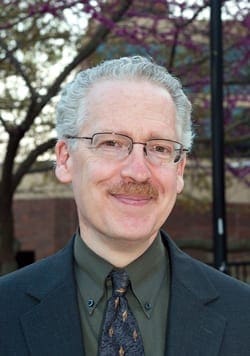 Lawrence M. Principe received his Ph.D. in Organic Chemistry from Indiana University and his Ph.D. in the History of Science from Johns Hopkins University. He is the Drew Professor of the Humanities at Johns Hopkins University and Professor in both the Department of History of Science and Technology and the Department of Chemistry there. He is also Director of the Charles Singleton Center for the Study of Premodern Europe. He has written or edited eleven books and published numerous scholarly papers. His main studies concern the early history of chemistry, and he is recognized as one of the foremost experts on the history of alchemy. He was the first recipient of the Francis Bacon Medal by the California Institute of Technology for significant contributions to the history of science. His book Alchemy Tried in the Fire: Starkey, Boyle, and the Fate of Helmontian Chymistry was awarded the Pfizer Award in 2005. In 2016, he received the Franklin-Lavoisier Prize in Paris.
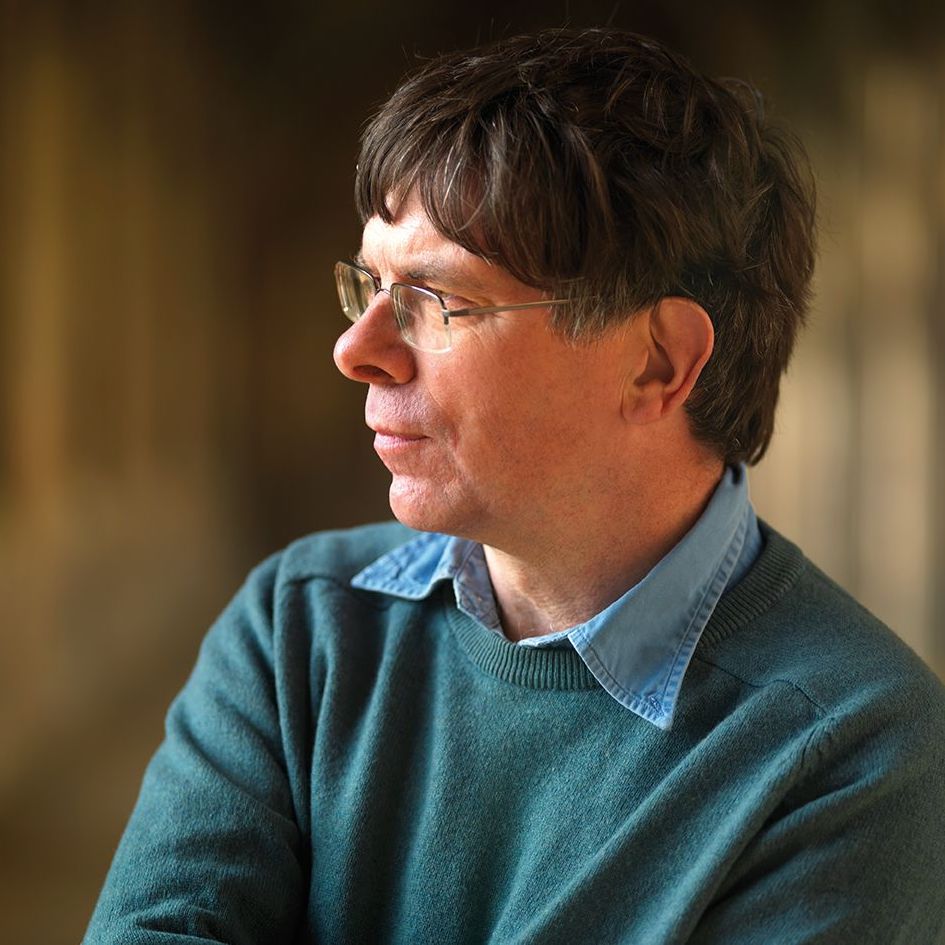 Simon Conway Morris, FRS, is Chair of Evolutionary Palaeobiology at the University of Cambridge. He is best known for his work on the Cambrian explosion, the Burgess Shale fossil fauna, and similar deposits in China and Greenland. In addition to working in these countries he has undertaken research in Australia, Canada, Mongolia and the United States. His studies on the Burgess Shale-type faunas, as well as the early evolution of skeletons, has encompassed a wide variety of groups, ranging from ctenophores to the earliest vertebrates. In January 2017, his team announced the discovery of an early ancestor of vertebrates, a bag-like sea creature, which lived about 540 million years ago. He gave the 2007 Gifford Lectures.and is the recipient of many other prestigious awards including the 1987 Walcott Medal, the 1989 Charles Schuchert Award 1989, the 1998 Charles Lyell Medal, and the 2007 Trotter Prize. He is the author of several books, including Life’s Solution (Cambridge, 2003).
 Mariusz Stopa OP, received his PhD in (theoretical) physics from the Jagiellonian University in 2011 based on his dissertation “Casimir effect without infinity: analysis of a class of models approximating
 Krzysztof Meissner – theoretical physicist, specializing in the theory of elementary particles, professor of physics at the University of Warsaw, Faculty of Physics, Institute of Theoretical Physics. He received his master’s degree in physics from the Faculty of Physics at the University of Warsaw in 1985 and was employed as an assistant at the Institute of Theoretical Physics, Department of Particle Theory and Forces. He continued his scientific work, defending his doctoral thesis in 1989, habilitating in 1997 with his dissertation “The Role of Non-Critical Symmetry of String Theory in String Cosmology” and becoming a professor in 2006. From 2009 to 2011, he was scientific director of the Andrzej Soltan Institute for Nuclear Problems. In 2011, he joined the newly established National Center for Nuclear Research. He participated in research at CERN. Member of the Physical Nomenclature Committee of the Polish Physical Society. He is a long-time associate of Sir Roger Penrose.
